

By: NOMAD Advocates
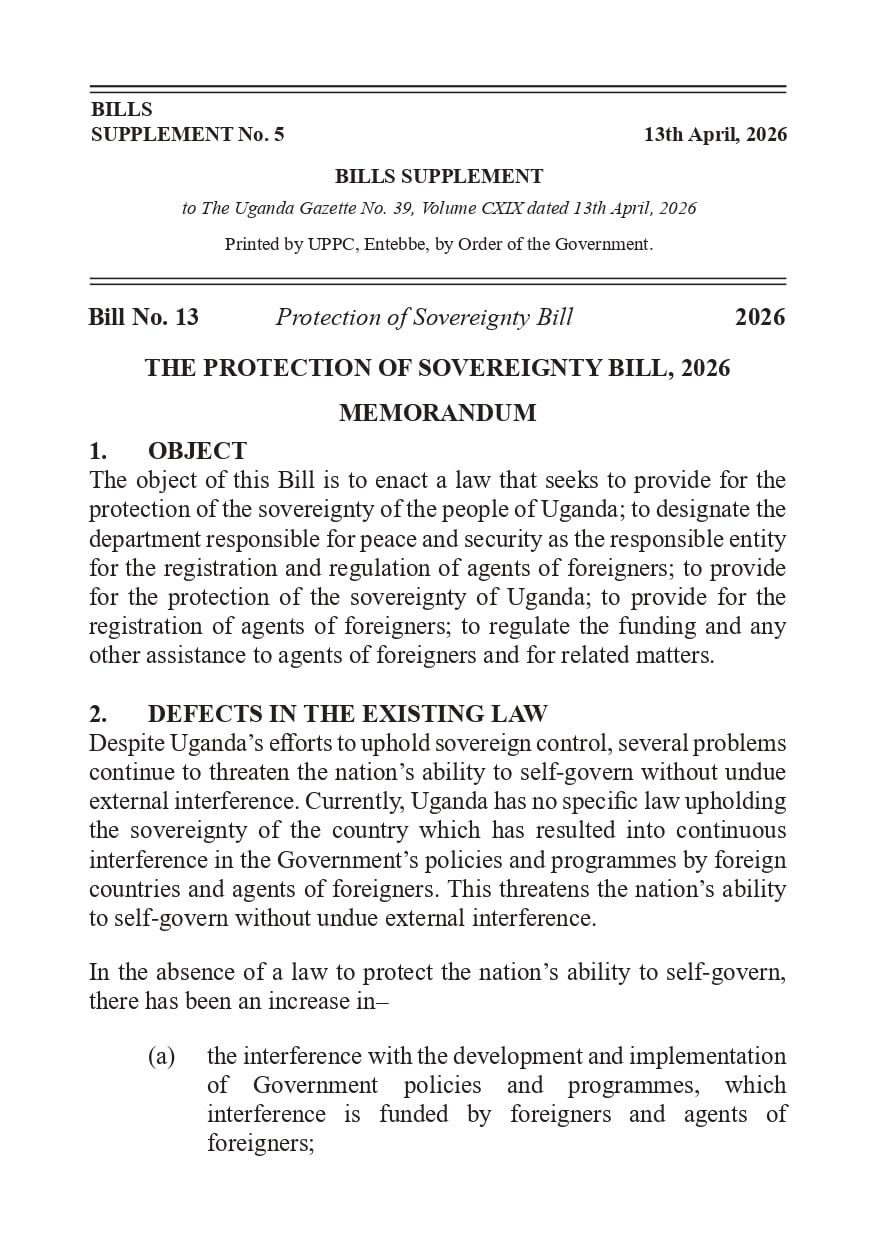
Uganda’s legal and political landscape is once again at the center of intense public debate following the introduction of the Protection of Sovereignty Bill, 2026 or “Anti-Sovereignty Bill” as most commentators have termed it. Touted by its proponents as a necessary safeguard against foreign interference, the Bill has sparked widespread discussion among lawyers, civil society, policymakers, and the general public.
At its core, the Bill raises fundamental constitutional questions about the balance between national sovereignty, individual rights, and Uganda’s obligations under international law. This article explores the key provisions of the Bill, the legal controversies it raises, and its potential implications for Uganda’s constitutional order.
Background to the Bill
The Bill emerges in a context where governments across the globe are increasingly concerned about external influence in domestic affairs. In Uganda, this concern has often been framed around foreign funding of non-governmental organizations, political advocacy, and international pressure on governance issues.
The Bill therefore seeks to regulate and, in some cases, criminalize conduct perceived as undermining Uganda’s sovereignty. While the objective of protecting national independence is legitimate, the legal mechanisms proposed have triggered significant debate.
Among its notable provisions, the Bill proposes to include the following:
- To criminalize acts deemed to undermine Uganda’s sovereignty, including certain forms of collaboration with foreign entities.
- To impose strict regulations on organizations including political parties receiving foreign funding.
- To grant broad powers to state agencies to investigate and prosecute alleged violations.
These provisions, while broad in scope, raise immediate questions regarding their compatibility with the Constitution of the Republic of Uganda, 1995.
We have therefore raised the following constitutional issues with the Bill:
- Suffocating the freedom of expression and association: The Constitution guarantees the rights to freedom of expression, assembly, and association. Critics argue that the Bill’s provisions could have a chilling effect on civil society organizations, journalists, and activists. The concern is not merely theoretical. If broadly interpreted, the law could potentially criminalize legitimate advocacy, particularly where such advocacy involves engagement with international actors.
- Vagueness and Over breadth: A central principle of criminal law is that offences must be clearly defined. Laws that are vague or overly broad risk arbitrary enforcement. Similarly, the Bill uses terms such as “undermining sovereignty,” which may be open to subjective interpretation. This raises the possibility of inconsistent application and potential abuse.
- It poses an open challenge to the dogma of separation of Powers: The Bill grants significant powers to executive agencies, including investigative and enforcement authority. This concentration of power raises concerns about the erosion of checks and balances, particularly if judicial oversight is limited.
- Breach of Uganda’s International Obligations: Uganda is a signatory to various international treaties that protect human rights, including freedom of expression and association. The Bill’s provisions may place Uganda at odds with these obligations, potentially exposing the country to international scrutiny.
The Judicial Perspective
Ugandan courts have historically played a critical role in safeguarding constitutional rights. In several landmark decisions, the judiciary has emphasized that limitations on fundamental rights must be necessary, proportionate, and justifiable in a democratic society.
If enacted into law, it is highly likely that the Protection of Sovereignty Bill will be subjected to constitutional challenge. The courts will then be called upon to determine whether its provisions meet the required constitutional standards.
In the end the Bill if passed into law will have far reaching implications on different entities. For instance, for companies, particularly those with international partnerships may face increased regulatory scrutiny. Compliance requirements could become more complex, requiring careful legal navigation. For the Civil Society such as Non-governmental organizations may need to reassess their funding structures and operational models. The risk of criminal liability could significantly impact advocacy work. For Legal Practitioners, the Bill presents both challenges and opportunities. Lawyers will play a crucial role in advising clients, interpreting the law, and potentially litigating constitutional issues arising from its implementation.
While the Bill has generated significant concern, it is important to approach the discussion with balance. The protection of national sovereignty is a legitimate state interest. However, such protection must be pursued within the framework of the Constitution and the rule of law. The challenge lies in ensuring that measures taken to safeguard sovereignty do not inadvertently undermine the very democratic principles they seek to protect.
Conclusion
The Protection of Sovereignty Bill represents a pivotal moment in Uganda’s legal development. It forces a national conversation about the boundaries of state power, the role of civil society, and the resilience of constitutional protections.
Whether the Bill ultimately strengthens or weakens Uganda’s legal framework will depend on how it is shaped, interpreted, and applied. What is certain is that it will remain a focal point of legal debate in the months ahead.
For comments about this article please reach out at NOMAD Advocates at info@nadvocates.com www.nadvocates.com

1 Comment